
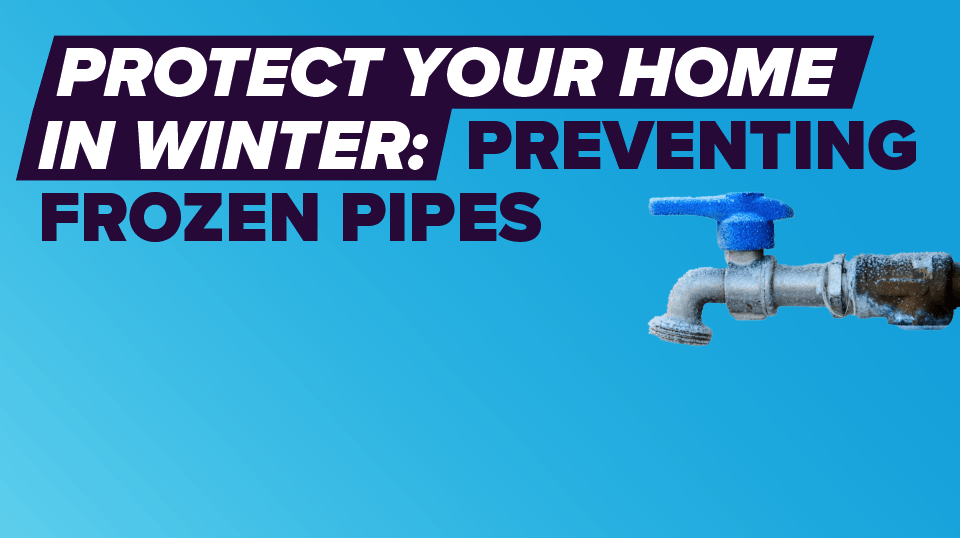
With temperatures dropping to below freezing point the UK, many homeowners are facing the reality that winter isn’t just chilly, it can be costly too.

Freezing weather can pose serious risks to your home if you’re not prepared. At Uinsure, we want to help you protect what matters most with simple steps that can save you stress, property damage and unexpected costs.


How freezing temperatures affect pipes and plumbing

When the temperature drops, water inside pipes can freeze and expand. That expansion increases pressure, which can lead to pipes cracking or bursting. The damage that follows can be extensive. Burst pipes don’t just stop water flow. They can flood rooms, damage floors, walls and furniture, and lead to costly repairs.

Pipes in colder or unheated areas, like lofts, garages and exterior walls, are particularly vulnerable. These incidents often happen when homeowners are away, leaving the heating off or set too low (Source: Allianz, 2025).


The cost of freezing weather

Data shows that adverse weather events continue to drive large claims for UK homeowners. In 2024, insurers paid out £585 million in weather-related home damage from storms, flooding and freezing temperatures (Source: ABI, 2025).

One of the most common and expensive issues? Frozen and burst pipes. In 2023, roughly 12,000 weather-related burst pipe claims were made, with the average cost exceeding £17,000 (Source: ABI, 2025). And it can get worse – the highest single payment reported between 2023 and 2025 was a huge £566,000. This was due to extensive water damage caused by a burst pipe (Source: Allianz, 2025).

What’s clear is that freezing conditions, especially when paired with high energy prices and homes left colder than usual, create a perfect storm for home damage.


Practical steps to prevent frozen pipes

Simple precautions can dramatically reduce the risk of freezing pipes.

If it is possible for you, keep the heating on during cold spells

Maintaining a stable temperature will prevent water inside pipes from freezing. British Gas recommends keeping your thermostat set to at least 7°C. If you don’t own a thermostat then you can turn your heating on intermittently to keep the average temperature up. If you are away for an extended period, you can turn off the water supply before leaving.

Insulate exposed pipes and tanks

Pipes in areas like lofts and basements are more susceptible to freezing as these areas are less likely to be heated with radiators. Invest in getting them insulated now to save stressful and costly situations later.

Open cupboard doors under sinks

This cost-free and simple solution is often overlooked. Opening cupboard doors allows warmer air to circulate around plumbing in colder rooms, making pipes less likely to freeze.

Learn where your stopcock is and check that it works

The stopcock is used to temporarily turn off your water supply. It’s usually under the kitchen sink, in a utility room, the cellar, or under the stairs. It’s important to know where it is so you can turn off water flow if you suspect the pipes in your home have frozen.

Know the signs of frozen pipes

Knowing there’s a problem is key in helping you prevent further damage. The most common signs are getting little or no water from a faucet, seeing frost or condensation on pipes, hearing gurgling/banging or seeing bulging pipes. This is particularly worth checking after a cold night.


What to do if you find frozen pipes

If you suspect the pipes have frozen the first thing to do is turn off your water supply using the stopcock. This prevents more water flowing into the pipes which will reduce the likelihood of pipes cracking or bursting.

After contacting your insurer, get in touch with a qualified plumber as soon as you can. They can help thaw the pipes safely using professional equipment, plus diagnose and repair any damage that may have already occurred.

If you want to warm the pipes before the plumber arrives then apply warm (not boiling) water to a cloth and gently rub it along the pipes. You can also use a hairdryer on a low-medium heat setting. Never use an open flame to thaw the pipes.

Remember, acting early can be key to reducing damage or preventing it entirely.


If the worst happens

Even with preparation, things can still go wrong. That’s where your home insurance comes in. If you do experience internal damage due to frozen pipes:

✓ Document the issue with photos if it’s safe to do so

✓ Contact your insurer as soon as possible

✓ Keep receipts for any repairs

✓ Ask your insurer about next steps to make a claim


Cold spells are part of British winters, but with a bit of planning and awareness you can reduce the risk of major issues.

For more tips on keeping your home and yourself safe in winter, we’ve created the ‘Be Winter Ready’ booklet. In there you will find advice on staying warm, protecting your home from burglars, reducing flooding risks and more.

Download Uinsure’s ‘Be Winter Ready’ booklet by clicking here.
Insurance has always played a role in protecting clients and in 2026 the importance is impossible to ignore.

A combination of housing market instability and the rising cost of living has left many clients looking for support beyond completion. People are seeking protection, value and simplicity that will wrap up their ‘to-do list’ faster than before.

At the same time, regulatory scrutiny regarding client outcomes continues to intensify. Advisers are expected to demonstrate that protection options are offered clearly, fairly and at the right time.


Start the GI conversation early

How and when GI is introduced often has a large impact. It can be the deciding factor in whether clients buy and how confident they feel in their decision.

When GI is positioned early in the home buying journey, clients view it as part of the full service that advisers offer. This makes them more receptive to the process. It positions you as the trusted expert. Now, clients have time to understand the cover, ask questions, and see the value.

Importantly, because you are ticking GI off their to-do list for them, it makes clients less likely to look elsewhere. The ease of an adviser addressing GI often outweighs the perceived benefits of researching other GI options themselves.

For clients the benefit is clarity and confidence. For advisers, embedding GI early means higher conversion rates, fewer rushed discussions and a better relationship with clients beyond completion.


Why clients should trust advisers instead of comparison websites

When clients arrange insurance through comparison websites, the main benefit is the perceived lower cost. However, this can lead to increased costs later down the line.

Price-led comparisons encourage clients to focus on the cheapest premium rather than the suitability of cover. Important details such as excess levels, optional add-ons and Defaqto ratings can be overlooked. This leaves clients exposed when they need to claim.

There’s also a lack of context. Comparison sites don’t understand the client’s wider circumstances or level of risk. As an adviser, you’ve been with them from the start. You understand exactly what they require. This puts you in the perfect position to reduce the likelihood of clients ending up with improper insurance.

This is reflected in the data. 2025 research from Fairer Finance surveyed 10,000 customers through their partner, Opinium, and found less than half of clients who purchased GI through a price comparison website trusted the site. For clients that purchased GI through advisers this figure increased to almost 60%.

In a market where financial reassurance matters more than ever, adviser-led GI provides a more considered alternative. One that prioritises suitability and negates the need for clients to look elsewhere.


The benefits for advisers

When GI is embedded in the mortgage journey, the commercial benefits follow naturally. There is an income boost through this reliable revenue stream that sits comfortably alongside mortgage advice. But the real value comes over time.

GI increases lifetime client value by creating annual renewal touchpoints. These touchpoints keep advisers connected well beyond the mortgage transaction. Ongoing talks strengthen ties and build trust. This opens the door to wider insurance discussions, such as Life or Critical Illness Cover.

It also helps advisers diversify their income beyond mortgages alone. In a market where volumes fluctuate, GI adds extra resilience and predictability. Advisers who embed GI into their process aren’t just improving client outcomes, they’re building a more sustainable business for themselves.


Making GI work better for advisers and clients

When GI is delivered through an adviser-led process, benefits are shared between the adviser and client.

Technology and data play an important role in bringing everything together. Simple quote journeys help make sure that clients are provided with options as quickly as possible. Meanwhile advisers benefit from a fast and repeatable process.

Uinsure makes this journey easier than ever, with our simple proposition:

✓ You do it. Login to our Adviser Platform and answer three quick questions to provide your clients with a binding GI quote.

✓ We do it. If you don’t have time to quote GI products, submit a referral to Uinsure and we’ll arrange the GI on your behalf.

✓ Your customer does it. Use UinsureCX to track an individual’s mortgage process and provide fully automated and hyper personalised communications at key moments in the mortgage cycle.

A clear and structured journey helps clients understand their options without feeling overwhelmed. Access to this, supported by a panel of top insurers, builds confidence – especially when backed by 5 Star Defaqto rated insurance and an ‘excellent’ Trustpilot score.


More than ever clients value certainty and ease beyond a low price. Now is the best time to start making GI a natural part of the mortgage journey and not an additional task. For advisers, it becomes embedded into everyday workflow. For clients, it delivers clarity, confidence and protection that will give them peace of mind.

Adviser/Partner verification

This area of the website is intended for financial advisers only.
If you're a customer, please click 'Stay in the policyholder area' below.
We will remember your preference.

I am a financial professional Stay in the policyholder area